
What Sets Riverside County Apart
Strategic Location within Dynamic Southern California Megaregion: Situated at the crossroads of Southern California’s major transportation corridors, Riverside County offers unmatched proximity to the Western U.S. market. With direct access to interstate highways, freight rail, and international airports, businesses can reach over 30 million consumers within a day’s drive, making it an ideal launch point for regional, national, and global operations.¹
Available Land and Lower Business Costs: Compared to coastal metros, Riverside County offers more affordable commercial and industrial real estate, with average lease rates 25-30% lower than in San Diego, Orange, and Los Angeles counties.² Combined with a strong inventory of development-ready sites, this cost advantage makes Riverside County a smart choice for businesses seeking expansion.
Housing Options and Affordability: Riverside County also enjoys a significant advantage in terms of housing affordability. The diverse housing stock provides a wide range of ownership and rental options, at prices 30-55% lower and rents 20-30% lower than SoCal’s coastal counties.
These marked differences in affordability are important both from the perspective of resident quality of life and from the standpoint of attracting and retaining the workforce needed to support the growth of targeted industry clusters.
Growing Workforce: Riverside County is characterized by a young, diverse labor pool, with 35% of the population under age 25³, supported by UC Riverside, a top-tier research university known for advancing economic mobility and labor education, CSU San Bernardino, CSU San Marcos (Temecula), California Baptist University, Loma Linda University, University of Redlands, La Sierra University, Chapman University, UMass Global, and a robust community college network. The CJF analysis underscores the need for continued improvements to Inland SoCal’s educational and workforce development capacities. Overall, the region’s educational attainment is comparatively low, lagging both state and national high school diploma and bachelor’s degree rates by nearly 10 percent. The region has been addressing this fundamental challenge through a range of interventions for more than a decade, with some progress, yet this differential is still recognized as a major factor constraining Inland SoCal’s economic competitiveness and mobility.
On average, Inland SoCal workers have 82.9 percent of the knowledge, skills, and abilities that quality jobs in the region require (see sidebar for discussion on quality/promising jobs).
What is a quality job?
The Inland SoCal CJF Plan uses a method called Opportunity Industries analysis, which was developed by the Brookings Institution to identify industries likely to create large numbers of quality jobs.
According to the Opportunity Industries definition, a quality job must:
Pay enough over the course of a year to cover a family’s basic needs and leave some extra money left over for emergencies and savings.
Include health insurance (which tends to mean that the job offers other benefits as well).
Provide a level of financial stability over the next ten years (either by continuing to be a quality job or by providing a path to a different quality job).
The Opportunity Industries analysis also considers “promising jobs – positions that don’t meet all three of these criteria but can still help a worker move into a quality job within a decade.”
Attention to promising jobs reflects the fact that many entry-level positions do not meet the definition of a quality job but can play an important role in helping workers gain the skills and experience they need to advance in their careers. Quality jobs and promising jobs together are referred to as “opportunity jobs.”
The amount of overlap between the knowledge, skills, and abilities that workers have and what quality jobs require is different depending on how much education a worker has. Workers with a four-year college degree have the highest amount of overlap (91.5 percent). This indicates that they possess nearly all the skills and qualifications that employers seek in high-quality jobs. But even those workers with only a high school diploma or G.E.D. have a high degree of overlap (88.1 percent). These findings suggest that focused training programs with wraparound supports that address key barriers to participation (e.g., childcare, transportation, affordability concerns) could help more Inland SoCal workers, including those with lower levels of formal education, secure a quality job4.
Business-Friendly Environment: Riverside County is generally recognized by the business/development community as a business-friendly alternative to Southern California’s more costly and land-constrained coastal counties. This positive image (which was confirmed by stakeholders participating in the EDSP process) stems from both market realities (less expensive real estate) and broader community/political support for quality growth. From a municipal government standpoint, Riverside County and its incorporated cities offer streamlined permitting and targeted incentives to support business growth. The County Office of Economic Development proactively coordinates with 75 organizations to deliver workforce training and site selection assistance. However, perceptions about business friendliness in Riverside County vary from city to city, with each municipality following its own practices for development entitlement, permit processing, etc.
A potential role of RivCoED (through the EDSP) is to provide technical guidance to its partner cities to ensure that Riverside County as a whole can present a unified front of business friendliness as part of countywide economic development messaging.
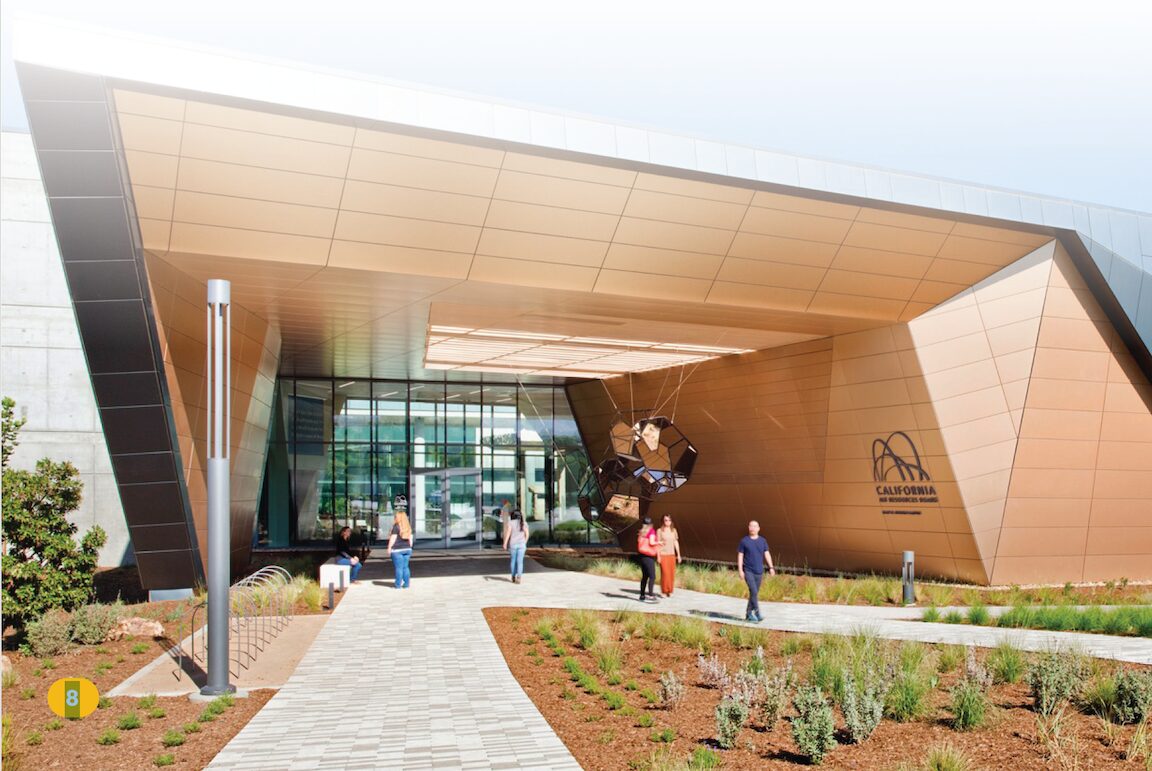
Innovation: As documented in the CJF planning effort, Riverside County stands out as the innovation core of Inland SoCal, with a concentrated set of high-impact assets that contribute to regional economic growth. Home to 20 higher education institutions, leading environmental science research facilities, and the state headquarters for air quality programs, the region has underlying strengths in innovations related to climate or clean tech action – in energy systems, emissions, and materials. Research activities take place primarily at UCR, which also fills critical institutional capacity roles in regional economic development. Adjacent to the UC Riverside campus stands the California Air Resources Board (CARB) Southern California Headquarters, one of the world’s most advanced facilities for vehicle and mobile-source emissions testing. Strengthening connections and capabilities among these and other assets can help the region make the most of its innovation ecosystem.
1. Based on August 2025 data from CoStar Group.
2. Based on July 2025 data from the California Association of Realtors.
3. Riverside Metro Region Workforce Demand Assessment, 2024.
4. Cited percentages of knowledge, skills, and abilities possessed by workers and required to secure quality jobs..